
Define what continuity means to the business
A healthy server does not always mean that a business service is usable. An application may depend on identity, networking, integrations, and a team that knows how to respond. Map those dependencies and agree on the impact of an interruption. Define recovery priorities around the work customers and employees need to complete.
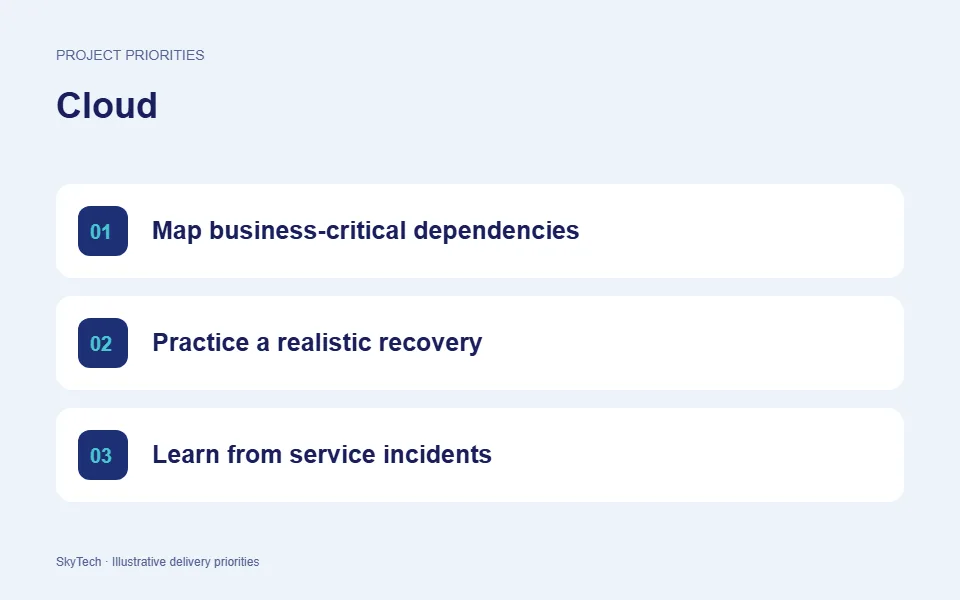
A practical next step: Map business-critical dependencies. Write down the current approach, agree on an owner, and define one outcome the team can review. Keep the first change focused enough that users can explain what improved and what still needs attention.
SkyTech Insight“A useful cloud foundation is one your teams can understand, use consistently, and improve as the business changes.”
Test the whole recovery journey
A backup is only one part of recovery. Test how the team restores data, reconnects services, verifies transactions, and informs users. Use a realistic scenario and record the decisions that slow the response. Clear responsibilities and a tested communication plan can matter as much as the infrastructure design.
A practical next step: Practice a realistic recovery. Write down the current approach, agree on an owner, and define one outcome the team can review. Keep the first change focused enough that users can explain what improved and what still needs attention.

Turn incident lessons into operating habits
Review incidents without assigning blame. Identify the conditions that made the failure possible and choose a small set of actions with owners and deadlines. Update the runbook, rehearse the changes, and check whether they reduce the same failure mode. Resilience grows through repeated practice and visible operational ownership.
A practical next step: Learn from service incidents. Write down the current approach, agree on an owner, and define one outcome the team can review. Keep the first change focused enough that users can explain what improved and what still needs attention.
A short, silent overview of the key ideas. Use the player controls to replay or show captions.